

You want the best for your pet. You read labels, watch ingredients, and wonder if commercial kibble is really doing enough. You are not alone. Millions of pet owners are making the switch to homemade pet food, and the reasons make sense.
This guide will show you exactly how to make nutritionally balanced homemade food for your dog or cat in 2026. You will get vet-backed ingredient lists, simple recipes, nutrient ratios, and safety tips all in one place.
What Is Homemade Pet Food?
Homemade pet food is any meal made at home using whole, human-grade ingredients like meat, vegetables, grains, and supplements. When properly balanced, it can provide dogs and cats with complete nutrition without the fillers and preservatives found in many commercial pet foods. The key is understanding what each pet species actually needs.
Why Pet Owners Are Switching to Homemade Food in 2026
More pet owners are choosing home-cooked meals after commercial pet food recalls, ingredient transparency concerns, and rising awareness about pet nutrition.
A home-cooked diet gives you full control over what goes into your pet’s bowl. You choose the protein source, the carbohydrate, and the fat content. You skip the artificial colors, mystery meals, and unnamed by-products.
That said, homemade does not automatically mean healthier. A poorly balanced homemade diet can cause serious nutritional deficiencies over time. This guide will help you avoid that.
Core Nutrition Basics: Dogs vs. Cats
Before you cook anything, understand that dogs and cats have very different nutritional needs.
| Nutrient | Dogs | Cats |
|---|---|---|
| Protein | 18-25% of diet | 26-35% of diet (obligate carnivores) |
| Fat | 10-15% | 15-20% |
| Carbohydrates | Yes, tolerated well | Limited, not essential |
| Taurine | Not required in diet | Essential (must come from food) |
| Vitamin A | Can convert from beta-carotene | Needs preformed Vitamin A (liver) |
| Arachidonic acid | Body produces it | Must come from animal fat |
Cats are obligate carnivores. Their bodies cannot produce certain nutrients on their own. Dogs are omnivores and handle a wider range of ingredients.
Safe Ingredients for Homemade Pet Food
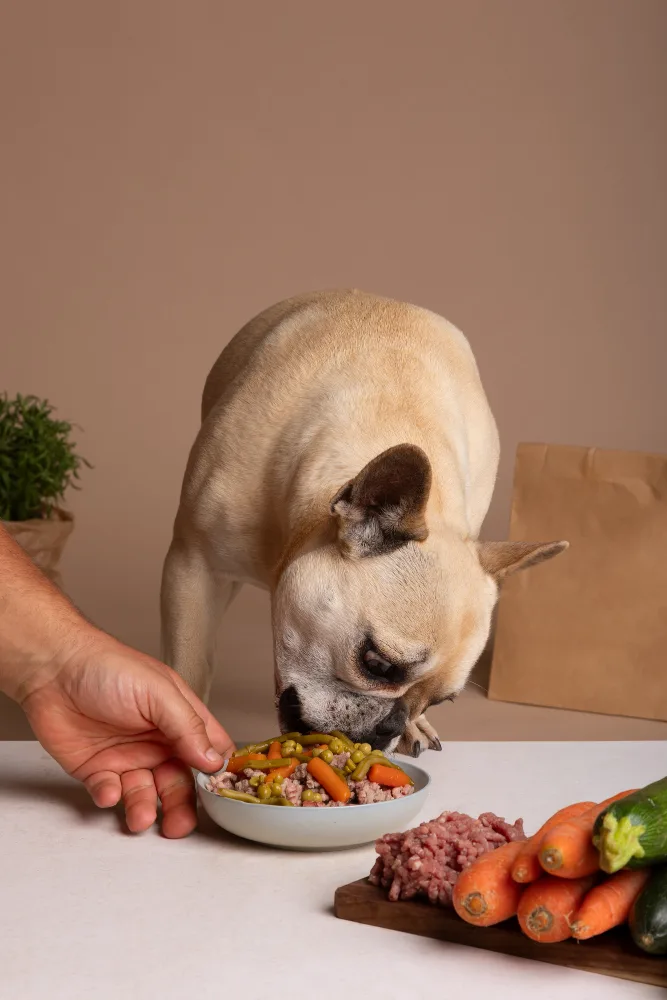
Choosing the right ingredients is the foundation of a healthy homemade pet diet. Not every human food is pet-friendly, so it helps to know exactly what works, what to limit, and what to avoid entirely. Below is a breakdown by category to make meal planning simple and safe.
Proteins (Safe for Both Dogs and Cats)
- Lean ground beef or ground sirloin
- Boneless chicken breast or thigh (cooked)
- Ground turkey (unseasoned)
- Canned or fresh salmon (no added salt)
- Cooked lamb or pork (lean cuts)
- Hard-boiled eggs (excellent protein source)
Vegetables (Dogs Only or Both with Caution)
- Carrots (great for both)
- Zucchini and green beans (dogs)
- Peas (dogs, in moderation)
- Sweet potato (dogs, cooked)
- Spinach (occasional use only, high oxalates)
Grains and Carbs (Mostly for Dogs)
- Brown rice (high fiber, easily digestible)
- White rice (lower fiber, better for sensitive stomachs)
- Oats and quinoa (dogs only, cooked)
Healthy Fats
- Fish oil or salmon oil (omega-3s, great for both)
- Coconut oil (small amounts)
- Olive oil (occasional use)
What to Absolutely Avoid
Before adding any human food to your pet’s diet, check the full list of safe and unsafe human foods for pets at Petnicki’s guide on safe and unsafe human foods for pets. Some common kitchen ingredients are toxic to animals.
Key items to never use:
- Onions, garlic, and chives (toxic to both dogs and cats)
- Grapes and raisins (can cause kidney failure in dogs)
- Xylitol (found in peanut butter and sugar-free products)
- Chocolate and caffeine
- Macadamia nuts
- Raw yeast dough
Homemade Dog Food Recipe: Balanced Beginner Meal
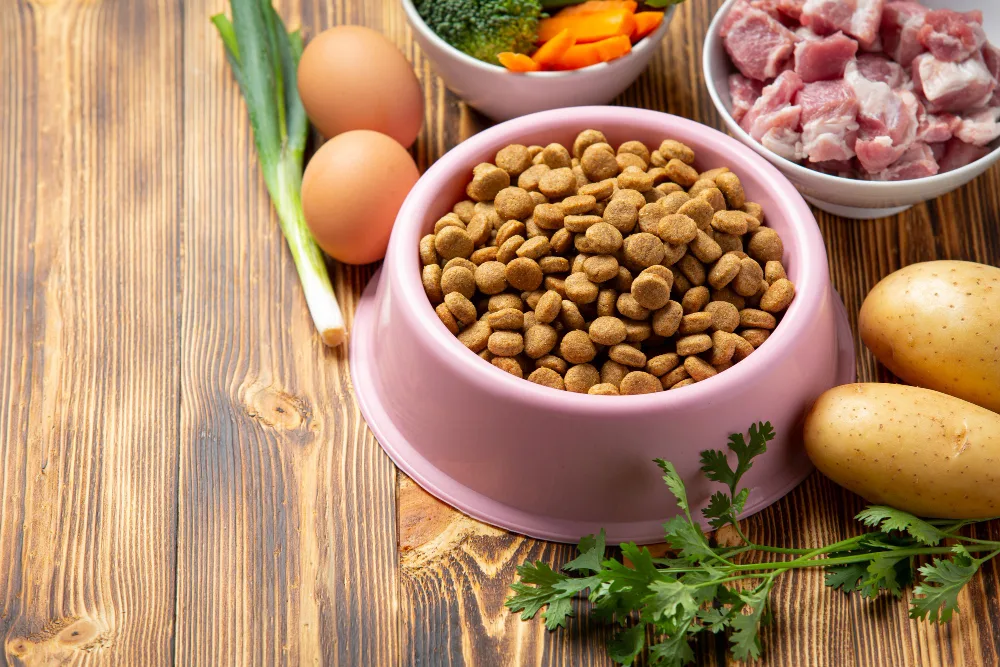
This recipe is vet-friendly and designed to meet adult dog nutritional needs when fed alongside a quality multivitamin supplement.
Makes approximately 8-10 cups. Serves a 30-40 lb dog for about 4 days.
Ingredients
- 1 lb lean ground beef or ground turkey
- 2 cups brown rice (cooked)
- 1 cup carrots (diced and cooked)
- 1 cup green beans (cooked)
- 3 hard-boiled eggs (peeled and chopped)
- 2 tablespoons fish oil or salmon oil
- Small handful of fresh parsley (digestive support)
Instructions
- Cook the ground beef in a pan over medium heat until fully cooked. Drain excess fat.
- Cook brown rice separately according to package directions.
- Steam or boil carrots and green beans until soft.
- Chop the hard-boiled eggs.
- Mix all ingredients together in a large bowl.
- Add fish oil and parsley. Stir well.
- Let it cool completely before serving.
- Store in the fridge for up to 4 days or freeze in portions.
No seasoning. Never add salt, garlic powder, onion powder, or any spice. Use plain, whole ingredients only.
According to ASPCA Animal Poison Control, many common kitchen seasonings are dangerous to pets and should be kept away from homemade pet food entirely.
Homemade Cat Food Recipe: High-Protein Meat Bowl
Cats need more protein and moisture in their diet. This recipe reflects their carnivore biology.
Makes approximately 4-6 servings.
Ingredients
- 1 lb boneless chicken thighs (cooked)
- 1/4 cup chicken liver (cooked, for Vitamin A and taurine support)
- 1/2 cup zucchini (cooked and mashed)
- 1 tablespoon salmon oil
- 1/4 cup low-sodium chicken broth (for moisture)
- Taurine supplement (follow dosage on packaging)
Instructions
- Bake or boil chicken thighs until fully cooked. Shred finely.
- Cook chicken liver separately and chop into small pieces.
- Mix shredded chicken, liver, and zucchini together.
- Add salmon oil and a small amount of chicken broth to add moisture.
- Mix in taurine supplement as directed.
- Serve at room temperature. Refrigerate leftovers for up to 3 days.
Cats benefit from wet food texture because they have a naturally low thirst drive. Adding broth to homemade meals helps with hydration and urinary health.
The American Veterinary Medical Association (AVMA) recommends consulting your vet before starting any homemade diet to ensure your pet’s specific needs are met.
Nutritional Supplements: Do You Need Them?
Yes. Even well-designed homemade meals rarely hit every micro-nutrient target on their own.
For dogs, consider:
- A canine multivitamin
- Fish oil (omega-3 fatty acids)
- Calcium supplement if not using bone meal
For cats, always include:
- Taurine supplement (critical for heart and eye health)
- Vitamin E
- Arachidonic acid sources (organ meats help here)
Speak with your vet before adding any supplement. Dosages depend on your pet’s weight, age, and health condition.
Feeding Portions: How Much to Feed
Portion size depends on your pet’s body weight, activity level, and age.
| Dog Weight | Daily Homemade Food Amount |
|---|---|
| Under 10 lbs | 1/2 to 3/4 cup per day |
| 10-30 lbs | 1 to 1.5 cups per day |
| 30-60 lbs | 2 to 3 cups per day |
| Over 60 lbs | 3 to 4+ cups per day |
For cats, most adult cats need around 200-250 calories per day. A 3-4 ounce serving of protein-based homemade food twice daily usually meets this.
Monitor your pet’s weight regularly. Adjust portions if they gain or lose weight noticeably.
Transitioning from Commercial to Homemade Food
Switching food too fast causes digestive upset. Always transition gradually.
- Days 1-3: 75% old food, 25% homemade
- Days 4-6: 50% old food, 50% homemade
- Days 7-9: 25% old food, 75% homemade
- Day 10 onward: 100% homemade
Watch for loose stool, vomiting, or low energy during the switch. If symptoms persist beyond a few days, slow down the transition and consult your vet.
You can learn more about how specific human foods affect your pet’s digestion by visiting Petnicki’s resource on safe and unsafe human foods for pets.
Common Mistakes to Avoid
- Using seasoned or processed meats from the store
- Skipping supplements and assuming the diet is complete
- Feeding bones that splinter (cooked bones are dangerous)
- Overfeeding protein to dogs with kidney issues
- Giving cats the same recipe as dogs (they have different needs)
- Not rotating protein sources (variety helps prevent deficiencies)
According to PetMD, one of the most common errors in homemade pet diets is calcium-phosphorus imbalance, which can lead to bone and joint problems over time.
FAQ: Homemade Pet Food Questions Answered
Q: Is homemade pet food safe for all dogs and cats?
Yes, when properly balanced and vet-approved. Pets with kidney disease, diabetes, or allergies need customized recipes. Always get a vet sign-off before starting.
Q: How long does homemade pet food last in the fridge?
Cooked pet food stays fresh for 3-4 days in the refrigerator. For longer storage, freeze individual portions and thaw as needed.
Q: Can I feed my cat a dog food recipe?
No. Cats need taurine, arachidonic acid, and higher protein levels that dog recipes do not provide. Always use species-specific recipes.
Q: Do I need to add supplements to homemade pet food?
In most cases, yes. Homemade meals rarely provide 100% of all micronutrients without supplementation. A vet-recommended multivitamin helps fill the gaps.
Q: What is the best protein for homemade dog food?
Lean meats like ground turkey, chicken, or lean beef work well. Eggs are also high-quality protein sources. Avoid fatty cuts and always cook meat thoroughly.
Q: Can I mix homemade food with kibble?
Yes, for dogs this is generally fine and can ease the transition. Avoid mixing raw and cooked food though, as they digest at different rates and can cause stomach issues.
Conclusion
Making homemade pet food in 2026 is one of the most meaningful things you can do for your dog or cat’s long-term health. With the right ingredients, correct portions, and proper supplements, a home-cooked diet can support better digestion, coat health, energy levels, and overall wellbeing.
The most important step is to get your vet involved before you start. Every pet is different, and a vet can help you tailor a recipe to your pet’s specific age, weight, and health needs.
For more helpful guidance on what is safe to feed your pet, explore Petnicki’s resources on pet nutrition and food safety. Small changes in your pet’s diet today can lead to real health improvements for years to come.