

Introduction
Guinea pig care are one of the most popular small pets worldwide, loved for their gentle nature, adorable squeaks, and easy handling. But despite their small size, guinea pigs require proper care to stay healthy and happy. From setting up the perfect cage to understanding their diet, grooming, and health needs, this article will teach you everything you need to know.
Whether you are a first-time guinea pig care owner or looking to improve your current pet’s lifestyle, this guinea pig care plan will help you give them the best possible life.
Understanding Guinea Pigs
Behavior and Temperament
Guinea pigs are social, curious animals that love interacting with humans and other guinea pigs. They communicate through sounds like “wheeking” (high-pitched squeaks), purring when content, and teeth chattering when upset.
They thrive in pairs or small groups. A lonely guinea pig can become depressed, so keeping at least two together is recommended (same sex to avoid breeding).
Housing and Cage Setup
Choosing the Right Cage
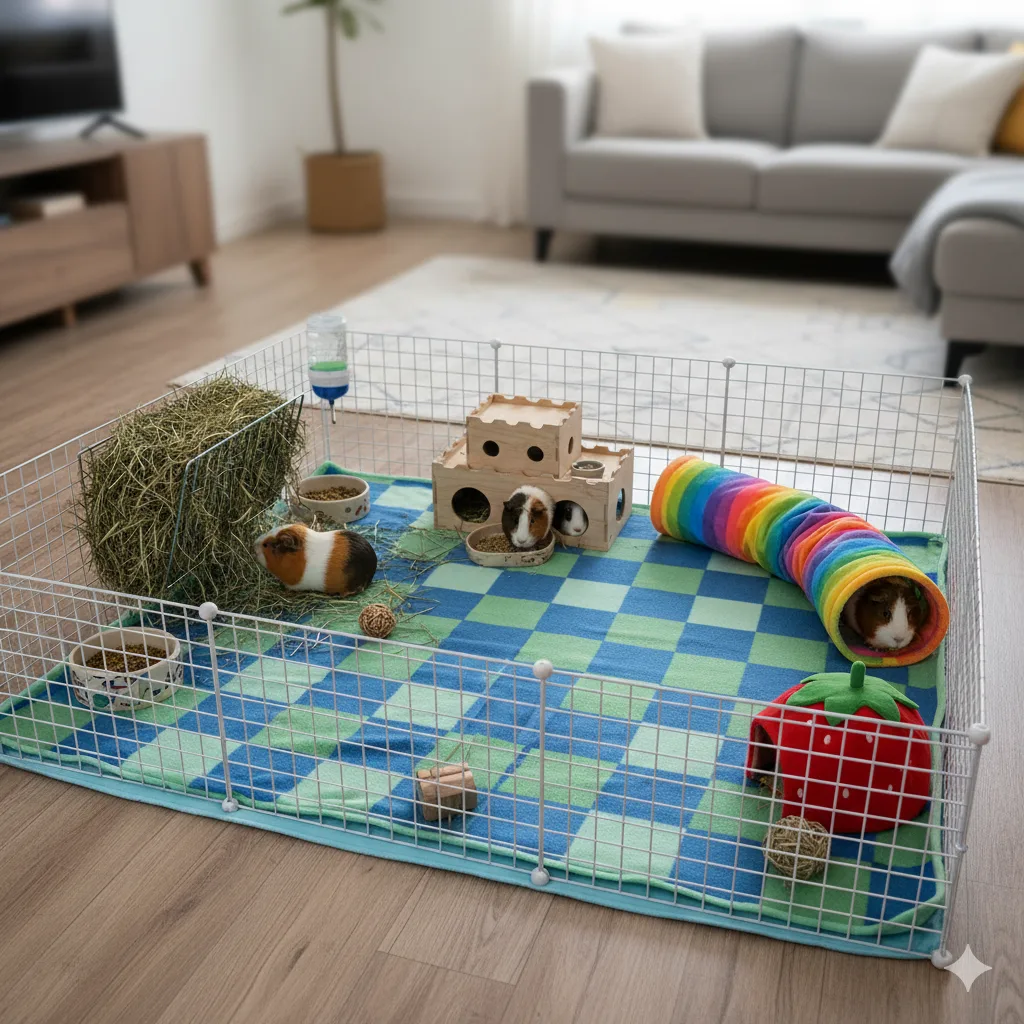
A healthy guinea pig needs space to move, run, and play. The cage should:
- Be at least 7.5 sq. ft. for one guinea pig (bigger is better).
- Have a solid bottom (avoid wire flooring to protect their feet).
- Be placed indoors in a well-ventilated, quiet, and temperature-controlled room.
| Cage Type | Pros | Cons |
|---|---|---|
| C&C Cages | Customizable, spacious | Requires assembly |
| Store-Bought Plastic Cages | Easy setup | Usually too small |
| DIY Wooden Enclosures | Can be very large | Needs waterproofing |
Bedding and Accessories
Choose soft, absorbent bedding like paper-based bedding or fleece liners. Avoid cedar or pine shavings as they release harmful oils.
Essential cage accessories include:
- Hideouts (for sleeping and feeling secure)
- Hay racks (keeps hay clean and off the floor)
- Water bottles (sipper-type bottles are best)
- Food bowls (heavy ceramic bowls prevent tipping)
How to Handle and Socialize Guinea Pigs
Gentle handling is key to building trust. Approach slowly, scoop from underneath, and support their body properly. Avoid loud noises and sudden movements that can scare them. Spend at least 15–20 minutes daily interacting with your guinea pigs so they bond with you and stay tame.
Cost of Owning a Guinea Pig
| Expense | Average Monthly Cost (USD) |
|---|---|
| Food & Hay | $20 – $30 |
| Bedding | $15 – $25 |
| Vet Checkups | $10 – $20 |
| Toys & Accessories | $10 – $15 |
| Total Average | $55 – $90 per month |
Diet and Nutrition
Balanced Guinea Pig Diet
A healthy guinea pig diet should consist of:
- Hay (70–80%) – Unlimited fresh timothy hay is crucial for digestion and dental health.
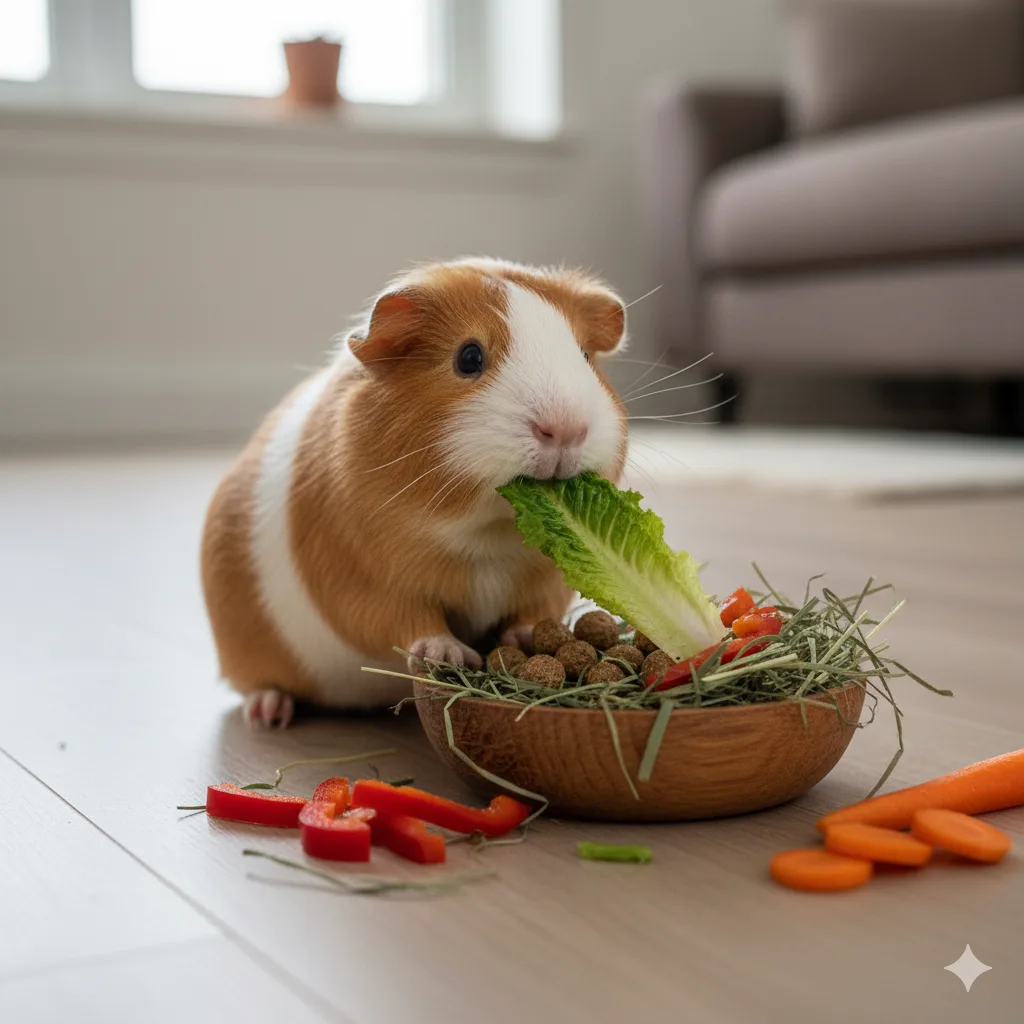
- Fresh Vegetables (15–20%) – Leafy greens like romaine lettuce, cilantro, kale (in moderation), and bell peppers for Vitamin C.
- Pellets (5–10%) – Fortified guinea pig pellets that are Vitamin C-enriched.
- Occasional Treats – Small amounts of fruit (apple, strawberry, blueberries) once or twice a week.
Avoid: iceberg lettuce, avocado, chocolate, onions, garlic, or any processed human food.
Best Vegetables and Fruits for Guinea Pig care
Fresh vegetables are an essential part of guinea pig care. They provide vitamin C, which guinea pigs cannot produce on their own. Offer bell peppers, romaine lettuce, carrots, cucumbers, and spinach in small portions daily. For fruits, choose apples, blueberries, and strawberries as occasional treats because they are high in sugar. Always wash produce thoroughly and remove uneaten portions after a few hours to keep the cage clean.
Vitamin C Requirement
Unlike many animals, guinea pigs cannot produce their own Vitamin C. Provide 20–30 mg daily through veggies or Vitamin C drops (consult your vet).
Grooming and Hygiene
Deep Cleaning Routine for the Cage
Besides spot cleaning daily, do a full deep cleaning once a week. Replace all bedding, wash the cage base with pet-safe disinfectant, and rinse thoroughly. Clean food bowls and water bottles with hot soapy water to prevent bacteria buildup.
Bathing
Guinea pig care are naturally clean and rarely need baths. Only bathe them if extremely dirty or under vet advice.
Nail Trimming
Trim nails every 3–4 weeks. Overgrown nails can cause pain or foot injuries.
Fur Care
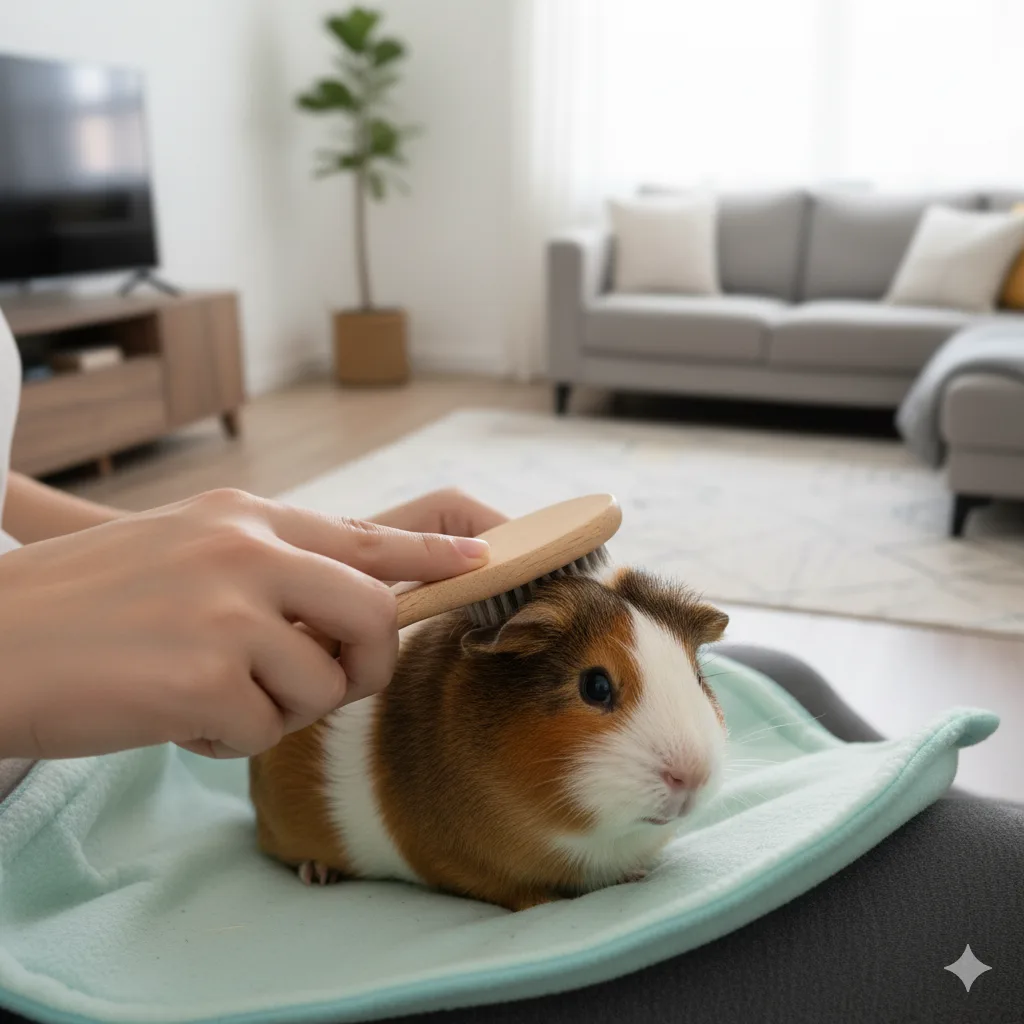
- Short-haired breeds: Weekly brushing
- Long-haired breeds (Peruvian, Silkie): Daily brushing to prevent tangles
Outdoor Playtime and Safety
If you have a safe backyard, allow your guinea pigs supervised outdoor playtime in a secure enclosure. Grass time provides natural foraging and exercise opportunities. Always stay close to protect them from predators, extreme temperatures, and toxic plants. Never leave guinea pigs unattended outdoors
Exercise and Mental Stimulation
Guinea Pig Mental Stimulation
Mental health is just as important as physical health. Provide toys like tunnels, chew sticks, and small hideouts to keep your guinea pigs entertained. Rearrange their cage accessories weekly to create a new environment and prevent boredom. You can also train them to respond to their name or follow simple commands using positive reinforcement and treats.
Floor Time
Guinea pigs need 1–2 hours of safe playtime outside the cage daily. Create a playpen with tunnels, ramps, and chew toys.
Enrichment Toys
Provide toys like hay-stuffed cardboard tubes, wooden chews, and treat balls to keep them entertained. Rotate toys weekly to prevent boredom.
Health and Veterinary Care
Common Guinea Pig Health Issues
Guinea pigs are prone to certain health problems such as scurvy (vitamin C deficiency), respiratory infections, and dental overgrowth. Watch for signs like loss of appetite, drooling, difficulty breathing, or changes in stool. Early veterinary care is crucial. Schedule routine health checkups every 6–12 months with an exotic animal vet.
Common Health Problems
- Scurvy (Vitamin C Deficiency) – Symptoms include lethargy, swollen joints, and rough coat.
- Respiratory Infections – Sneezing, nasal discharge, and labored breathing require immediate vet care.
- Dental Issues – Overgrown teeth can cause weight loss. Hay helps keep teeth trimmed naturally.
Signs of a Healthy Guinea Pig Care
- Bright, alert eyes
- Smooth, shiny fur
- Active and vocal
- Normal eating and drinking habits
When to See a Vet
If you notice weight loss, diarrhea, refusal to eat, or strange behavior, consult an exotic pet vet immediately.
Seasonal Care Tips
- Winter: Keep the cage away from drafts, maintain room temperature between 18–24°C (65–75°F).
- Summer: Provide frozen water bottles wrapped in cloth to prevent overheating.
Bonding and Handling
Handle your guinea pig gently with two hands supporting their body. Talk softly to build trust and offer treats during handling sessions.
FAQs
Q1: How long do guinea pigs live?
Most guinea pigs live 5–7 years, though some may live up to 8 years with proper care.
Q2: Can I keep just one guinea pig care?
It’s not recommended. Guinea pigs are social animals and thrive better with a companion.
Q3: What vegetables can guinea pigs eat daily?
Romaine lettuce, cilantro, bell peppers, and small amounts of carrot.
Q4: How often should I clean the cage?
Spot-clean daily and do a deep clean every week.
Q5: Can guinea pigs be litter trained?
Yes, they can learn to use a litter box, especially if placed near their eating area.
Conclusion
Caring for a guinea pig care may seem simple, but these adorable pets need a proper diet, safe housing, mental stimulation, and regular health checks. By following this complete care plan, you’ll ensure your guinea pigs live a long, healthy, and happy life.