
Thanksgiving is a busy time for families, with meals to prepare, guests to welcome, and holiday traditions to enjoy. However, the increased activity can create challenges for companion parrots. Unfamiliar visitors, changing routines, and hours of kitchen preparation may leave birds bored, overstimulated, or looking for attention. Providing suitable enrichment helps make the holiday more comfortable while supporting their natural behaviors.
In the wild, parrots spend much of their day searching for food, exploring their surroundings, and solving small challenges. Foraging activities recreate some of these experiences in a home environment. With simple materials, familiar treats, and thoughtfully selected toys, bird owners can prepare engaging activities before guests arrive. Here are five practical ideas to keep parrots mentally stimulated and occupied while the household celebrates Thanksgiving.
1. Set Up a Thanksgiving Foraging Station
A dedicated foraging station gives parrots an interesting activity while their owners prepare holiday meals. Instead of relying entirely on a regular food bowl, create a small exploration area with several bird-safe materials and hidden rewards.
Start with a shallow tray or a familiar play surface. Add untreated paper strips, small cardboard pieces, and a few approved treats. Arrange the materials so birds can investigate different textures and discover food through natural movements such as pulling, lifting, and shredding.
Keep the first setup relatively simple. Birds that are unfamiliar with foraging may need time to understand how the activity works. Using favorite treats can encourage them to participate without creating frustration.
Position the station in a comfortable room away from kitchen traffic and cooking equipment. This gives parrots an opportunity to stay engaged without being exposed to unnecessary household activity. Owners should supervise the station and replace damaged materials when needed.
2. Introduce an Interactive Foraging Wheel
Interactive toys provide another useful way to encourage natural problem-solving behaviors. Rather than receiving every treat immediately, parrots must investigate how a toy works and discover how to access its contents.
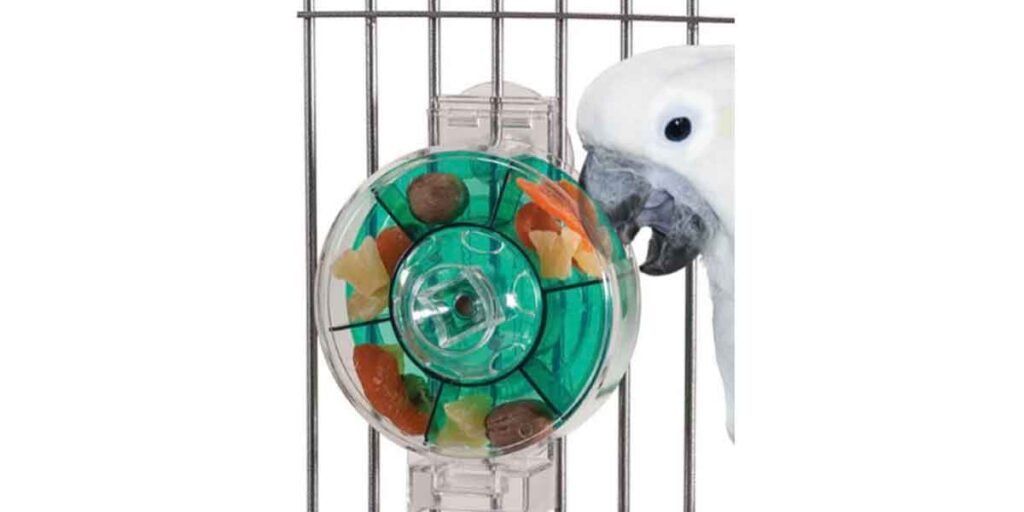
A foraging wheel offers an engaging option for this type of enrichment. Its compartments can hold small portions of appropriate bird treats, encouraging exploration and repeated interaction. Depending on the bird’s experience, owners can begin with easily accessible rewards and gradually introduce more challenging arrangements.
Preparation is important. Introduce the toy several days before Thanksgiving so the bird has time to become familiar with its movement and structure. This prevents the activity from becoming another unfamiliar experience during an already busy day.
Choose toys appropriate for the bird’s size and abilities, and inspect them regularly for damage. Initial interactions should be supervised to ensure comfortable and safe use.
3. Create Treat-Filled Paper Foraging Bundles
Paper foraging bundles are inexpensive, easy to prepare, and useful for birds that enjoy chewing and shredding. They provide an opportunity to investigate different textures while working toward a small reward.
Use plain, untreated paper without staples, plastic coatings, glossy finishes, or strong adhesives. Place a few small pieces of an approved treat between loosely folded paper layers. The bird can pull apart the bundle to discover what is hidden inside.
For variety, prepare several bundles with different folding styles. Some can offer immediately visible rewards, while others require additional investigation. This allows owners to adjust the difficulty according to their parrot’s confidence and experience.
Paper bundles can be prepared in advance, making them convenient during Thanksgiving cooking and entertaining. However, supervision remains important. Some birds may swallow paper rather than simply shred it, so remove materials if unsafe chewing behavior develops.
4. Organize a Holiday Vegetable Foraging Hunt
Thanksgiving provides an opportunity to introduce seasonal vegetables as part of a bird’s regular enrichment routine. Carrots, broccoli, and plain pumpkin can offer interesting colors, textures, and flavors when prepared appropriately.
Wash vegetables thoroughly and serve them separately from human holiday dishes. Sweet potatoes and pumpkin should be plain, without butter, sugar, salt, seasoning, or sauces. Introduce unfamiliar ingredients gradually and consider the bird’s established dietary needs.
Rather than placing everything in one bowl, divide small portions between several familiar feeding locations. A few pieces can be placed inside suitable foraging toys, while others can be offered in bird-safe food holders.
This simple arrangement encourages movement and exploration while making mealtime more interesting. It also gives owners an opportunity to offer variety without depending entirely on sugary or high-fat treats.
Remember that Thanksgiving recipes are not automatically suitable for parrots. Avoid ingredients such as onion, garlic, chocolate, avocado, and alcohol. Keeping bird food separate from the family meal helps prevent accidental exposure to unsafe ingredients.
5. Prepare a Quiet Enrichment Area for Guests
Not every parrot enjoys a crowded home. Some birds are naturally curious around visitors, while others become uncomfortable when unfamiliar people, noises, and movements disrupt their normal environment.
Prepare a quieter area where the bird can enjoy familiar toys, comfortable perches, and simple foraging activities. Include a shredding toy, an easy treat puzzle, and a few familiar feeding opportunities. Avoid introducing several unfamiliar objects on Thanksgiving morning.
A quiet enrichment area is particularly useful when guests arrive or family members gather around the dining table. It gives parrots a comfortable alternative to busy social spaces while allowing owners to maintain appropriate supervision.
Keep visitors from handling the bird without permission, and make sure doors and windows remain secure. Cooking fumes, smoke, scented candles, and overheated nonstick cookware can also create serious hazards for birds, so keep their environment separate from kitchen risks.
Maintaining familiar feeding and sleeping schedules can further support a calmer holiday experience.
Conclusion
Thanksgiving enrichment is about more than keeping parrots entertained. It provides opportunities for natural exploration, problem-solving, and food discovery while helping birds adjust to changes in their usual surroundings. Simple paper bundles, interactive toys, vegetable hunts, and quiet activity areas can all contribute to a more engaging holiday routine.
The best activities are those that match an individual bird’s personality, experience, and physical abilities. Preparing toys in advance, choosing appropriate materials, and supervising interactions are important parts of responsible enrichment.
As families prepare for Thanksgiving, including companion birds in holiday planning deserves equal consideration. A little preparation can help create a safer and more comfortable environment while everyone enjoys the celebration. Consistent enrichment throughout the year also supports natural behaviors and contributes to a rewarding relationship between parrots and their owners.