
Spinach Apple Carrot Dog Treats: A Safe Recipe to Bake
Six ingredients, one bowl, and a boundary most recipes skip: which dogs should not get these at all.
The short version: spinach apple carrot dog treats suit a healthy dog in the small quantities one biscuit holds, provided the apple is cored and seeded first. Portion by roughly a tenth of daily calories, not by counting biscuits. Dogs with a history of calcium oxalate bladder or kidney stones should skip this recipe, or check with a vet first.
I baked a batch of these on a wet Tuesday afternoon, mostly to use up a carrier bag of vegetables that wasn’t going to last the week. The dough is stiffer than a human biscuit mix, there’s no sugar to loosen it, and it smells faintly of apple crumble by the time the tray goes in.
What You Need for Spinach Apple Carrot Dog Treats
The ingredients below make roughly sixteen small biscuits, using a whole apple, one carrot and a cup of spinach against enough flour to bind them into a stiff dough.
- 1 cup finely chopped spinach
- 1 apple, cored and seeds removed, grated
- 1 medium carrot, grated
- 1 large egg
- 1½ cups whole wheat flour (oat flour works for a dog with a sensitive stomach)
- 2–4 tablespoons water, added a tablespoon at a time, only if the dough won’t come together
Ingredient by Ingredient
Each of the three fresh ingredients earns its place according to the American Kennel Club’s list of fruits and vegetables dogs can eat, and each carries one thing worth knowing before it goes in the bowl.
Spinach
The AKC lists it as safe. The thing to know: spinach carries a relatively high oxalate load, which is why the boundary section below matters for dogs with a stone history.
Apple
The flesh is fine and a good source of fibre. The seeds are not: they carry cyanide, so cored and seeded is not optional here.
Carrot
A low-calorie snack on its own. Whole or chunked raw carrot is a known choking risk for small dogs, which grating sidesteps entirely, so it’s the right prep here regardless of size.
The apple seed is the one ingredient that earns a second look beyond the card above. According to the ASPCA’s Animal Poison Control Center, the stems, leaves and seeds of an apple contain cyanide, worse once the plant material has started to wilt. The centre gives no exact toxic dose for a biscuit’s worth of chopped apple, which is exactly why the flesh goes in the bowl and the core goes straight in the compost.
Mixing and Baking the Dough
Heat the oven to 175°C (350°F), line a baking tray with paper, and grate the apple and carrot before the egg goes anywhere near them. The whole process, start to cooling rack, takes about forty minutes with twenty of those spent in the oven.
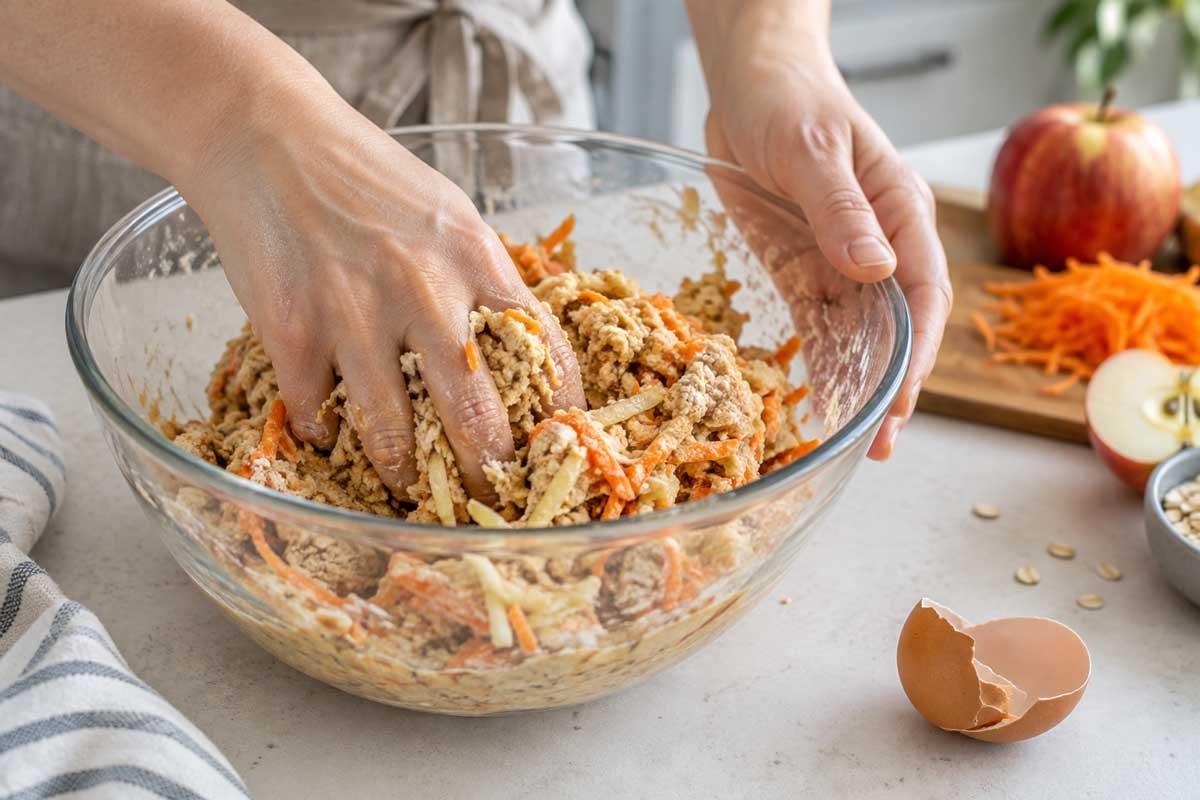
- Mix the egg through the grated apple, carrot and chopped spinach in a large bowl.
- Stir in the flour a third at a time until a stiff dough forms.
- Add water only if the mixture won’t hold together, a tablespoon at a time. Most batches I’ve made need none at all.
- Roll to about a centimetre thick on a floured surface and cut into shapes, or pinch off pieces and flatten them by hand.
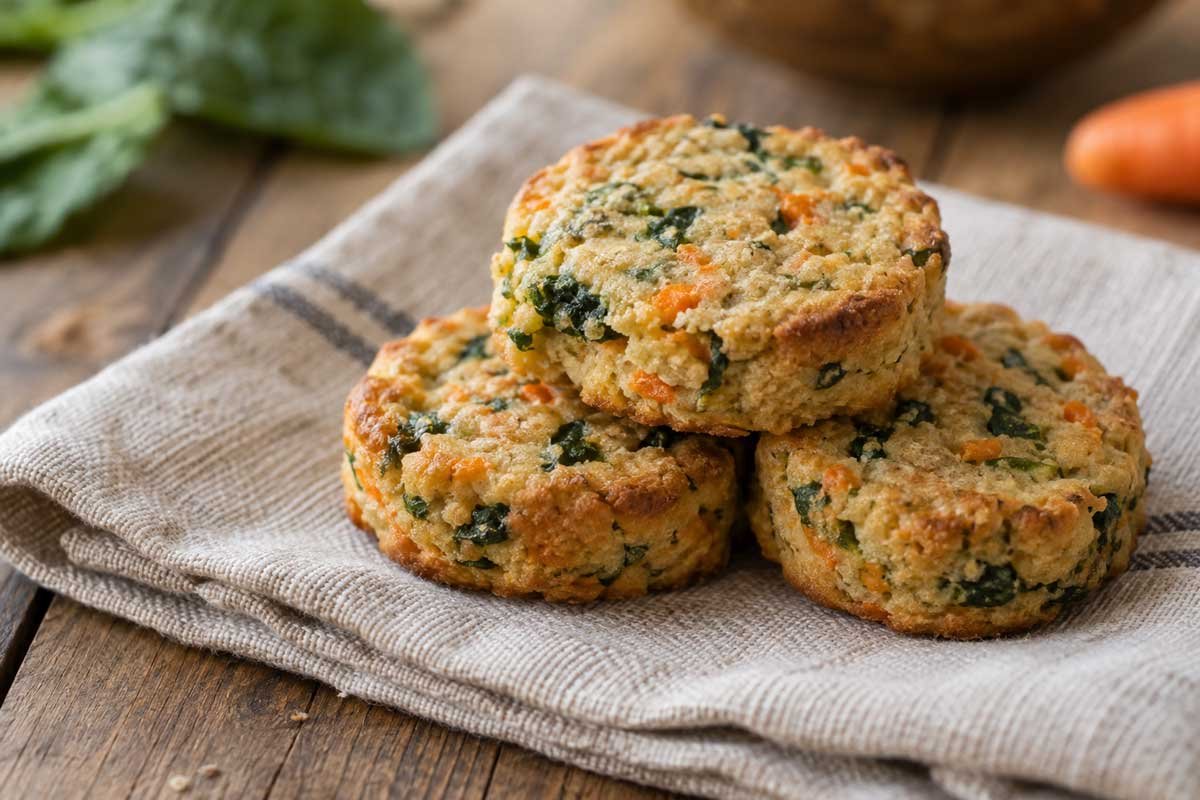
- Bake for 20–25 minutes, until firm and lightly golden at the edges.
- Cool completely on a wire rack before handing one over or putting the rest away.
A dough this dense browns from the outside in, so the edges are the reliable signal. A pale centre on a tray of golden edges usually still means the batch is done, though cutting one open settles it if in doubt.
How Much Is Safe to Feed
According to VCA Animal Hospitals, treats should make up no more than roughly a tenth of a dog’s daily calorie intake, with a proper meal making up the rest. A flat rule such as “two or three a day” ignores treat size, and treat size is most of what decides the number.
“Well…the point of wanting them to be ‘healthy’….(‘natural’ ingredients or whatever)….treats shouldn’t make up more than 10% of your dog’s intake so …. I’m not saying there’s NO need to care but the nutritional impact should be low.”
– r/Dogtraining (7 upvotes)
Work it out from the calorie side instead. Roughly estimate how many treats this size a dog’s daily calorie allowance would support at a tenth of the total, and stop there. A lean, active dog can usually stretch that further than one who spends the day on the sofa. Cut the biscuits smaller for a small dog. Size solves more of this question than counting ever will.
When to Skip This Recipe
The one group that should sit this out
A dog with a history of calcium oxalate bladder or kidney stones. Spinach carries a relatively high oxalate load next to most dog-safe vegetables.
The veterinary nutrition team at VNG Pets notes that for a dog that has already had stones, cutting dietary oxalate is a sensible precaution, even though it isn’t the sole cause on its own. For a healthy dog with no stone history, small amounts of an oxalate-containing food are fine.
Neither source gives a precise safe threshold; that gap in the research stays a gap rather than an invented number. A puppy with a generally sensitive stomach, or any dog mid-way through a prescription diet, is worth a quick word with a vet before this recipe goes in the bowl.
Other Safe Swaps
Not every dog takes to spinach, and a batch worth varying is a batch that gets made again. The AKC’s own list gives a few direct substitutes that keep the same low-calorie, high-fibre profile: blueberries or pumpkin in place of the apple, or green beans and peas in place of the spinach. Swap one ingredient at a time rather than all three, so a reaction is easy to trace back to its source.
Keeping a Batch Fresh
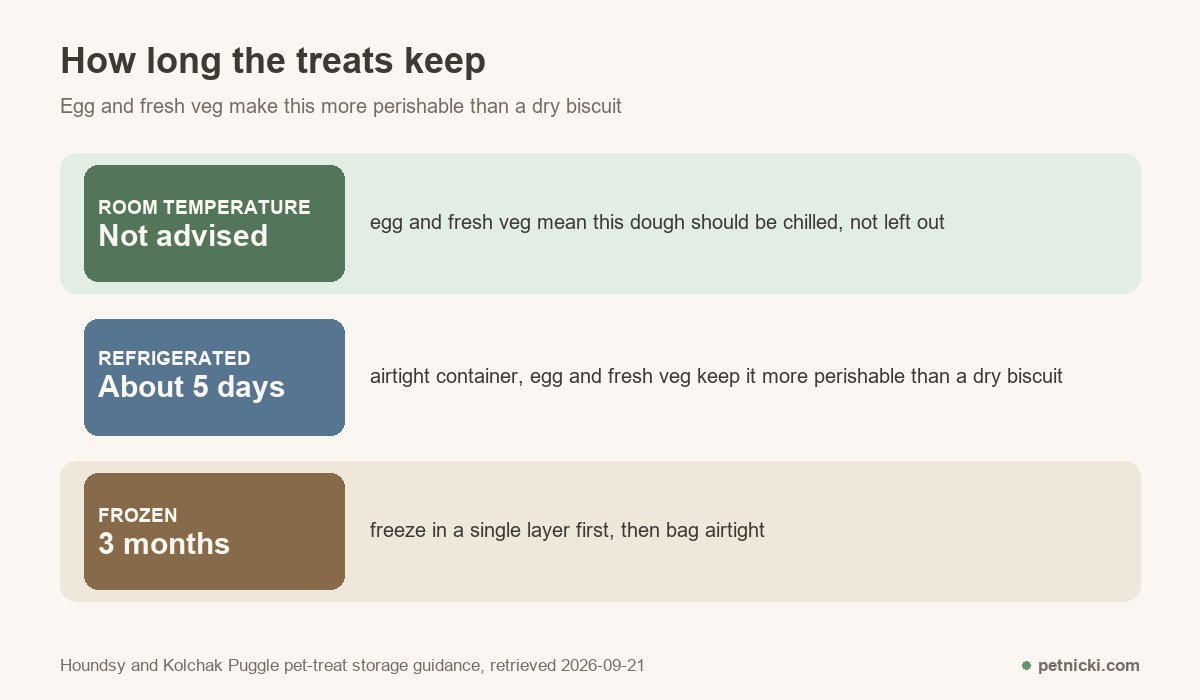
Homemade treats like these carry no preservatives, and the dough is more perishable than a dry biscuit: egg, grated apple and carrot all hold moisture. Pet-treat storage guidance puts that combination in the refrigerate-promptly category rather than a multi-day room-temperature shelf life. Kept airtight in the fridge, a batch is good for about five days. Frozen in a single layer before being bagged up, a batch keeps for up to three months, and I pull out a handful at a time rather than defrosting the lot.
FAQ
Is spinach a laxative for dogs?
Not typically at treat-sized portions. Loose stools linked to spinach usually show up with large or repeated servings in oxalate-sensitive dogs, not with the small amount folded into a batch of biscuits.
Can puppies eat spinach apple carrot dog treats?
A vet is worth asking first. Puppies have more sensitive digestion than adult dogs, and there’s no published guidance settling an exact age these treats become fine to offer.
Can I add peanut butter to this recipe?
Leave it out unless the jar is confirmed xylitol-free. Many peanut butters now use xylitol as a sweetener, and the ASPCA’s xylitol safety warning flags it as toxic to dogs in small amounts, capable of triggering a rapid drop in blood sugar; this recipe doesn’t need it for flavour or texture.
What if my dog has a grain allergy?
Swap the whole wheat flour for oat flour in equal measure. The dough behaves the same way and bakes on the same timing.
One batch, six ingredients, no guesswork
Core the apple, grate the carrot, and portion by calories rather than by counting biscuits.