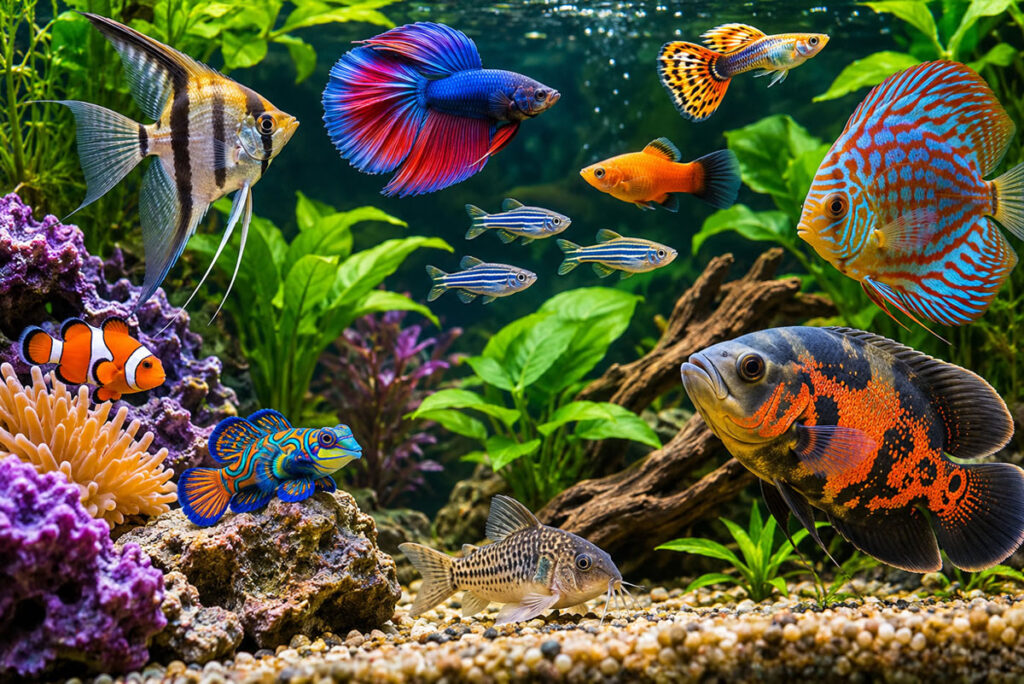

Keeping an aquarium can be a rewarding hobby, bringing colour, movement and a fascinating glimpse of underwater life into your home or workplace. With hundreds of freshwater and marine fish species available, there are plenty of options for creating an aquarium that suits your space, experience and budget.
However, not all aquarium fish have the same needs. Some species are relatively easy to care for, making them ideal for beginners, while others require specialist equipment, carefully controlled water conditions and more experienced handling.
In this guide, we’ll explore some of the most popular types of aquarium fish, including those suitable for first-time fishkeepers and more demanding species that require expert care.
Freshwater Fish for Beginners
Freshwater aquariums are often the preferred starting point for new fishkeepers. They are generally less complex to maintain than marine aquariums, and many freshwater species can thrive with straightforward equipment and regular care.
Here are some popular fish worth considering when setting up your first aquarium.
1. Guppies
Guppies are among the most popular freshwater aquarium fish, thanks to their bright colours, small size and active personalities.
They come in a wide range of colours and patterns, with males often displaying particularly colourful tails. Guppies are social fish and generally do well in groups, provided the aquarium has suitable water conditions.
They are also livebearers, meaning they give birth to live young rather than laying eggs. This makes them interesting to observe, although their ability to reproduce quickly is something beginners should consider.
Care level: Easy
Best suited to: Beginners with a suitably sized, established tropical aquarium.
2. Platies
Platies are another excellent choice for people new to fishkeeping. These peaceful freshwater fish are available in several colours, including orange, red, yellow and blue.
They are relatively hardy, enjoy swimming in groups and can live alongside various other peaceful species that share their water requirements.
Like guppies, platies are livebearers and may reproduce regularly in suitable conditions.
Care level: Easy
Best suited to: Beginners looking for colourful, peaceful community fish.
3. Zebra Danios
Zebra danios are small, energetic fish recognised by their distinctive horizontal stripes.
They are generally hardy and adaptable, making them a popular option for beginners. However, they are very active swimmers and need sufficient horizontal swimming space.
Zebra danios should be kept in groups, ideally six or more, as they are naturally social fish.
Care level: Easy
Best suited to: Beginners with an aquarium that provides plenty of swimming room.
4. Corydoras Catfish
Corydoras are small, peaceful bottom-dwelling fish that spend much of their time searching for food along the aquarium floor.
They are popular in community aquariums and are particularly interesting to watch as they explore the substrate.
Corydoras should be kept in groups of their own species and need a smooth, suitable substrate that will not damage their sensitive barbels. They also require their own sinking food, rather than relying on leftovers from other fish.
Care level: Easy to moderate, depending on the species.
Best suited to: Beginners with an established aquarium and suitable bottom-dwelling conditions.
5. Betta Fish
Betta fish, also known as Siamese fighting fish, are famous for their striking colours and flowing fins.
Although they are often marketed as beginner-friendly fish, they still require a properly heated, filtered aquarium with gentle water movement and plenty of suitable hiding places.
Male bettas are territorial and should not be housed together. They may also be unsuitable for certain community aquariums, so careful consideration is needed before introducing other species.
Care level: Easy to moderate
Best suited to: Beginners prepared to provide a dedicated, appropriately equipped aquarium.
Freshwater Fish for More Experienced Fishkeepers
As fishkeepers gain experience, they may wish to explore species that require more specific water conditions, larger aquariums or specialist feeding arrangements.
These fish can make impressive additions to an aquarium, but their needs should be researched carefully before purchase.
6. Discus Fish
Discus are widely admired for their circular shape, beautiful patterns and graceful swimming movements.
However, they are also among the more demanding freshwater aquarium fish.
Discus generally require warm, exceptionally clean and stable water conditions. They can be sensitive to sudden changes in temperature, water chemistry and overall aquarium quality.
They also benefit from carefully planned feeding routines and appropriate social groupings.
Care level: Advanced
Best suited to: Experienced fishkeepers who can maintain consistently high water quality.
7. Freshwater Angelfish
Freshwater angelfish are elegant fish recognised by their tall bodies and long, flowing fins.
Although relatively straightforward to maintain under suitable conditions, they can become territorial, particularly when breeding.
They also grow considerably larger than many beginners expect and may eat very small fish that fit into their mouths.
Angelfish need an aquarium with adequate height and swimming space, alongside carefully selected tankmates.
Care level: Moderate
Best suited to: Intermediate fishkeepers with a suitably sized community aquarium.
8. Oscar Fish
Oscars are large, intelligent cichlids that are known for their distinctive personalities and ability to recognise their keepers.
They can become impressive centrepieces, but they are not suitable for small aquariums.
Adult Oscars can grow to approximately 30 cm or more and produce substantial amounts of waste. They therefore require spacious aquariums, powerful filtration and regular maintenance.
They may also eat smaller fish and can become aggressive towards unsuitable tankmates.
Care level: Advanced
Best suited to: Experienced fishkeepers with large aquariums and appropriate filtration.
9. African Cichlids
African cichlids are popular for their vibrant colours and fascinating social behaviour.
Many species originate from lakes such as Malawi and Tanganyika, where water conditions can differ significantly from those preferred by other tropical fish.
Some African cichlids are highly territorial, meaning aquarium layout, stocking levels and species selection are particularly important.
Different species also have different dietary requirements, with some feeding primarily on plant-based material and others requiring more protein-rich foods.
Care level: Moderate to advanced
Best suited to: Fishkeepers experienced in managing territorial fish and specialist water conditions.
Marine Aquarium Fish: Colourful Species for Saltwater Aquariums
Marine aquariums offer the opportunity to keep some of the most colourful and unusual fish found in the world’s oceans.
However, saltwater aquariums generally require more specialist equipment and closer monitoring than freshwater setups.
Salinity, temperature, filtration and water chemistry must all be carefully controlled. Some marine species also have very specific dietary requirements.
10. Clownfish
Clownfish are among the most recognisable marine aquarium fish, thanks to their orange, white and black markings.
Captive-bred clownfish are often recommended as an introduction to marine fishkeeping because many are relatively hardy once an aquarium is properly established.
Despite their association with sea anemones, clownfish do not need an anemone to survive in captivity.
They still require stable saltwater conditions, appropriate feeding and carefully chosen tankmates.
Care level: Moderate
Best suited to: Beginners to marine fishkeeping with a properly established saltwater aquarium.
11. Royal Gramma
The royal gramma is a small marine fish with a distinctive purple and yellow body.
It is popular in saltwater aquariums because of its attractive appearance and relatively manageable care requirements.
Royal grammas generally prefer aquariums with rockwork, caves and hiding places. Although often peaceful towards unrelated species, they can defend their chosen territory.
Care level: Moderate
Best suited to: Marine fishkeepers looking for a colourful fish for a suitable established aquarium.
12. Mandarin Dragonet
Mandarin dragonets are among the most visually striking marine fish, featuring intricate patterns of blue, green and orange.
However, they are also among the more challenging species to keep successfully.
Their main difficulty is feeding. Many mandarin dragonets depend heavily on small live crustaceans, such as copepods, and may struggle in aquariums without a reliable natural food supply.
Even experienced marine fishkeepers must ensure that sufficient food is available to prevent these fish from slowly starving.
Care level: Advanced
Best suited to: Experienced marine fishkeepers with mature aquariums and reliable specialist food sources.
13. Marine Angelfish
Marine angelfish are admired for their bold colours, unusual patterns and graceful movements.
However, their care requirements vary considerably between species.
Some require very large aquariums, while others may nip at corals and other invertebrates. Certain species also need specialised diets or particularly stable water conditions.
For these reasons, marine angelfish should always be selected according to the specific species rather than their appearance alone.
Care level: Moderate to advanced
Best suited to: Experienced marine fishkeepers who understand the needs of individual species.
Can Different Types of Aquarium Fish Live Together?
One of the most important considerations when choosing aquarium fish is compatibility.
Although two species may look attractive together, this does not necessarily mean they can safely share the same aquarium.
Some fish are naturally peaceful, while others are territorial, aggressive or predatory. Different species may also require different temperatures, water chemistry, swimming space and feeding arrangements.
For example, a large Oscar would not be a suitable companion for small guppies, while certain African cichlids may require water conditions that are unsuitable for many common community fish.
Even peaceful species can become stressed if they are housed with particularly active or territorial fish.
Before buying any aquarium fish, always seek expert advice about which species can safely live together. A knowledgeable aquatic specialist can help you choose compatible fish that share similar environmental and dietary requirements.
It is also important to consider whether fish should be kept individually, in pairs or in larger groups. Some species naturally form shoals and can become stressed when kept alone.
How Many Fish Can You Keep in an Aquarium?
Another common question, particularly among beginners, is how many fish can be kept in an aquarium of a particular size.
Unfortunately, there is no single rule that works for every aquarium.
Although some traditional fishkeeping advice uses simple calculations based on fish length and water volume, these methods can be misleading.
The number of fish an aquarium can safely accommodate depends on several factors, including:
Aquarium size and shape: Larger aquariums generally provide more water volume and swimming space, but the available floor area and tank dimensions also matter.
Adult fish size: A fish that is small when purchased may grow considerably larger.
Species behaviour: Active swimmers, territorial fish and shoaling species have different space requirements.
Filtration capacity: An appropriate filtration system helps process waste and maintain water quality.
Oxygen availability: Stocking levels must account for the oxygen needs of the fish.
Maintenance requirements: Water changes, feeding habits and waste production all influence safe stocking levels.
A 100-litre aquarium containing small, peaceful community fish will have very different stocking requirements from one containing larger cichlids.
For this reason, always ask an experienced aquatic specialist how many fish are suitable for your particular aquarium before making a purchase.
It is also worth remembering that new aquariums need time to establish a healthy biological filtration system before fish are introduced. This process, commonly known as cycling, is essential for managing harmful ammonia and nitrite.
Adding too many fish too quickly can overwhelm the biological filter and lead to dangerous water conditions.
What Equipment Do Different Aquarium Fish Need?
Choosing the right fish is only one part of successful aquarium keeping. You must also ensure that your aquarium has the equipment needed to support the species you intend to keep.
Most aquariums require an appropriate filtration system, lighting and equipment for monitoring water quality.
Tropical freshwater fish will usually need a heater to maintain a stable temperature, while coldwater species have different temperature requirements.
Marine aquariums need additional equipment to prepare and monitor saltwater, including a reliable way to measure salinity.
Depending on the species, other equipment may include air pumps, specialist lighting, additional water circulation, suitable substrates, plants, rocks and hiding places.
Some fish require strong water movement, while others prefer calmer conditions. Bottom-dwelling species may need smooth sand, while territorial fish often benefit from carefully arranged rocks and caves.
It is important to choose equipment based on the needs of the fish rather than simply purchasing a standard aquarium setup and assuming it will suit every species.
Choosing the Right Food for Aquarium Fish
Different aquarium fish have different dietary needs, and providing the correct food is essential for their health.
Many common freshwater community fish will accept good-quality flakes or pellets, although their diets should still be appropriate for the individual species.
Other fish may require sinking pellets, algae-based foods, frozen foods or specialist live foods.
For example, Corydoras need food that reaches the bottom of the aquarium, while some herbivorous cichlids require diets containing a high proportion of plant-based ingredients.
Predatory fish may need protein-rich diets, while specialist marine species such as mandarin dragonets can depend on particular types of small live prey.
Feeding the wrong food, or providing too much, can lead to health problems and poor water quality.
Always seek expert advice about the correct diet, feeding frequency and food quantities for the fish you intend to keep.
Buying an Aquarium or Renting One
For most hobbyists, purchasing an aquarium and gradually developing their own setup is part of the enjoyment of fishkeeping.
However, some people, and more commonly businesses, choose to rent an aquarium instead. Aquarium rental services can include the aquarium, equipment and fish as part of the rental arrangement, often with professional maintenance provided.
This can be an appealing option for offices, reception areas and other commercial spaces where an attractive aquarium is wanted without the responsibility of managing every aspect of its upkeep.
Final Thoughts: Choosing the Best Fish for Your Aquarium
Whether you’re setting up your first freshwater aquarium or planning a more advanced marine environment, choosing the right fish is essential for creating a healthy and enjoyable underwater habitat.
Beginner-friendly species such as guppies, platies and zebra danios can provide an excellent introduction to fishkeeping, while discus, Oscars and specialist marine fish offer new challenges for more experienced enthusiasts.
However, even fish considered easy to care for still depend on suitable water conditions, correct feeding, appropriate equipment and regular maintenance.
The most important advice is to research every species carefully and speak to an experienced aquatic specialist before purchasing any fish. They can help you understand which species can live together, how many fish your aquarium can safely accommodate and what additional equipment or food may be required.
By taking the time to make informed decisions, you can create an aquarium that not only looks beautiful but also provides a safe, healthy and suitable environment for its inhabitants for years to come.