
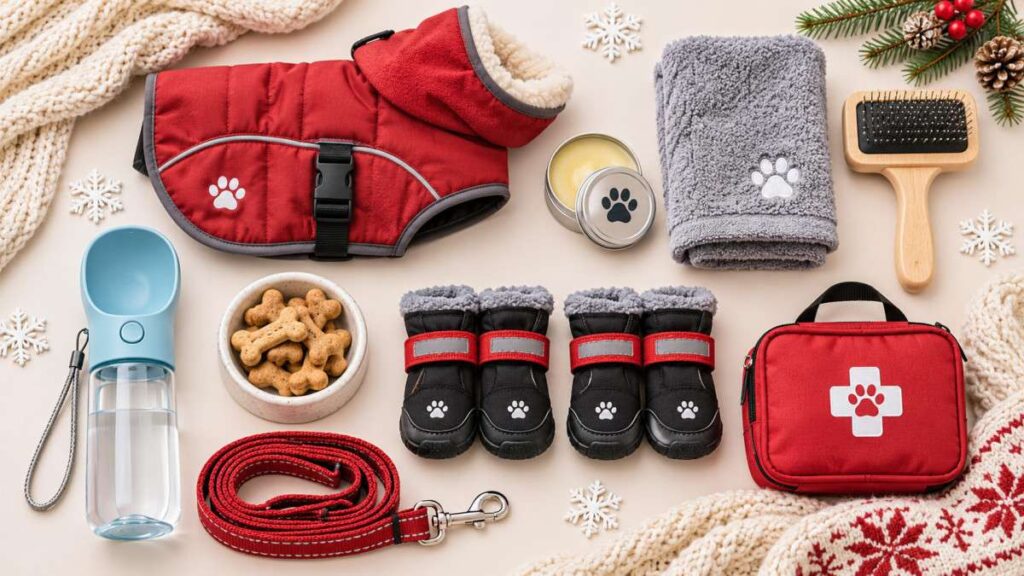

Keeping your dog warm is only one part of looking after them in winter. There’s also the rain, the snow, the icy pavements, and the salt on the roads, and all of it makes walks harder than they normally are. On some days it makes them unsafe. Your dog might come back in with soaking fur, muddy legs, or sore paws, and sometimes there’s snow packed in between the toes. That sounds like a lot to deal with, but it isn’t, as long as you’ve got a few basic things ready before you need them. That’s what this list is, so these are the things I’d keep around.
1. Weather-Appropriate Walking Gear
When it’s really cold, one long outing can be too much, especially for dogs that don’t cope well with cold. Two or three short walks usually work better. And keep an eye on them while you’re out. If they start shivering, don’t want to go on, or slow down and you can’t see why, they’re probably getting too cold, so just head home.
Then there’s the gear. You’ll want a harness or collar that fits well and a strong leash. If your dog pulls, I’d go for a harness that fits properly, because you get more control that way, and that helps a lot on slippery paths. If you’re out in rain or wet snow a lot, a water-resistant outer layer is worth getting too.
2. Paw Protection for Snow, Ice, and Road Salt
Your dog’s paws can be quite sensitive. Snow can lead to ice balls getting stuck between the toes, and the road salts and chemical de-icers can irritate the paws. Rough ice and frozen ground can also cause painful cuts and grazes for your pup.
So, get into the habit of checking your dog’s paws after every walk. Rinse them in lukewarm water to wash off the salt and chemicals, then dry them well, including between the toes. That also makes it less likely your dog will lick something harmful off their feet.
As for extra winter paw protection for dogs, you’ve got two choices. Well-fitted boots put a real barrier between the paw and the salt, ice, and rough ground. A pet-safe paw balm helps stop the pads from drying out and cracking, though it doesn’t cover the paw the way a boot does.
3. Quick-Dry Towels Near the Door
Keep a few towels by the entrance, so you can dry your dog as soon as you’re inside. If you don’t, wet fur, muddy legs, and dirty paws will carry water and grit through the house.
Focus on trying to dry off their paws, lower legs, stomach, and between the toes. These areas tend to get the muddiest during their walks. If your dog has a thick coat, work the towel gently down into the fur. Wiping the top isn’t enough. The coat can feel dry on the outside while the dampness is still sitting close to the skin.
4. A Comfortable Cold-Weather Layer
The first question is whether your dog needs one at all. Plenty don’t. Small breeds, puppies, older dogs, and dogs with short or thin coats get cold faster than big dogs with thick coats, so they’re the ones that tend to do better with an extra layer.
Then think about the weather. A warm sweater is fine for a dry, chilly morning. In rain or wet snow, you want something water-resistant instead. If it’s wet when you get home, take it off and let the coat dry out.
When you’re looking at cold-weather layers for dogs, check the fit. It should cover the chest and back without holding them back. Your dog needs to walk, sit, stretch, and go to the toilet normally, and if any of that is awkward, it’s the wrong jacket.
5. Reflective or Light-Up Visibility Gear
Dark fur is hard to see on a dark street. That matters more in winter because the days are short and you may be walking in the morning or evening. The weather makes it worse too. If it’s raining, foggy, or snowing, drivers and cyclists will have more trouble seeing you or your dog near the road.
A reflective collar, harness, or leash helps. So does a small LED light clipped to the collar or harness. Just make sure everything is attached well and doesn’t restrict your dog. Even with reflective gear on, though, it’s still best to stick to well-lit paths and keep your dog close when you’re near traffic.
6. A Simple Paw-Rinse and Grooming Kit
A small grooming kit to clean your dog off after a walk in the winter is a great idea! You won’t need anything elaborate. All you really need is a small basin of warm water, pet-friendly wipes, a soft brush, and some simple paw care products.
Once you’ve come back into the house, give their muddy and salty paws a quick rinse in the basin, and afterwards use a clean towel to dry them off. Pet wipes are great for getting rid of some of the dirt in between washes, but they aren’t a substitute for a full rinse, especially after your dog has been on road salt or de-icers.
If you have a soft brush or comb, you can gently brush off any loose hair and dried mud or dirt from their fur. If your dog has long hair, you might want to keep their hair shorter, around their paws if possible. This can help to reduce build-up, but don’t cut their hair too short. They still need their coat to help to keep them warm.
7. Water and Familiar Food
You don’t necessarily have to feed your pup more in winter. A very active dog that spends more time outside may burn extra calories, but a dog that’s exercising less may need less food. So it really depends on your dog. Go by how active they are and what shape they’re in, and ask your vet if you’re not sure.
Water is a different story. Your dog still needs fresh water all through winter, because the cold doesn’t take away the need to drink, and heating indoors can make the air quite dry. Keep fresh water out at home, and on longer walks or trips, bring a bottle and a collapsible bowl.
And if you’re going on a road trip, pack their usual food. The day is already disruptive enough without unfamiliar meals on top of it.
8. A Dry Resting Area
After time outside, your dog needs somewhere warm and dry to rest. A washable blanket or a comfortable bed gives them their own warm spot, so they aren’t lying straight on a cold floor. Older dogs or those with joint issues may also find it easier to have some support underneath them.
Just ensure their bed isn’t by any drafty doors or damp corners. If your dog comes in wet, dry them off before they settle down. Wash the bedding often, particularly in muddy weather, so the dirt and damp don’t build up in it.
9. Basic First-Aid and Emergency Information
Keep a basic first aid kit for your dog. That means sterile gauze, non-stick dressings, saline, a few pairs of disposable gloves, and any wound products your vet has told you to use. If something goes wrong on a long walk or while you’re away from home, you’ll be glad to have it with you.
It’s also worth finding out what cold-related illness looks like, just in case. With hypothermia, you might notice shivering, weakness, a dog that’s a lot more tired than normal, slow breathing, confusion, or skin that looks very pale or feels cold. If your dog shows any of these, get them somewhere warm and call your vet straight away. This is why your vet’s number should be saved in your phone already, along with a note of any medication your dog takes regularly. You don’t want to be hunting for it while you’re in the middle of an emergency.
The Key Takeaway
Providing your dog with comfort in winter is dependent on your dog. Ensure you have their essentials on hand based on their individual requirements. Constantly monitor how they react to the changing conditions and adapt accordingly.