

Key Takeaways
- Single-ingredient treats can make it easier to identify the protein a dog is receiving.
- Joyride’s Kitchen offers both freeze-dried raw treats and dehydrated chews, so format matters as much as the ingredient list.
- Treats are supplemental foods, not replacements for a complete and balanced daily diet.
- Portion size, chewing ability, health history, and safe handling should guide every treat choice.
Why Are Single-Ingredient Dog Treats a Practical Choice?
Dog owners often want rewards with recognizable ingredients, especially when they are trying to limit unnecessary extras or keep track of animal proteins. single ingredient dog treats from Joyride’s Kitchen provide a straightforward starting point, as many products list a single animal-based ingredient, such as chicken or turkey hearts.
A short ingredient panel can simplify comparison, but it does not automatically make a product appropriate for every dog. A treat may still be calorie-dense, rich, too firm for a particular chewer, or unsuitable for a dog following a veterinary diet. The most useful approach is to treat ingredient simplicity as one selection factor, then consider serving size, product purpose, and the individual dog.
How Does Joyride’s Kitchen Define a Simple Dog Treat?
“Single ingredient,” “limited ingredient,” and “complete and balanced” are related terms, but they are not interchangeable. Understanding the distinction helps prevent owners from assuming that every simple treat can serve as a meal.
- Single ingredient: The ingredient statement lists one food ingredient, such as chicken hearts.
- Limited ingredient: The product has a short ingredient list, but it may contain more than one component.
- Complete and balanced: The food is formulated to meet nutritional requirements when fed as directed. Treats typically do not fill this role.
Joyride’s Kitchen separates its treats from its freeze-dried dog food recipes. This distinction is useful for owners building a daily feeding plan: treats can support training and enrichment, while complete food is intended to provide the diet’s nutritional foundation.
Which Joyride’s Kitchen Treats Offer One Primary Protein?
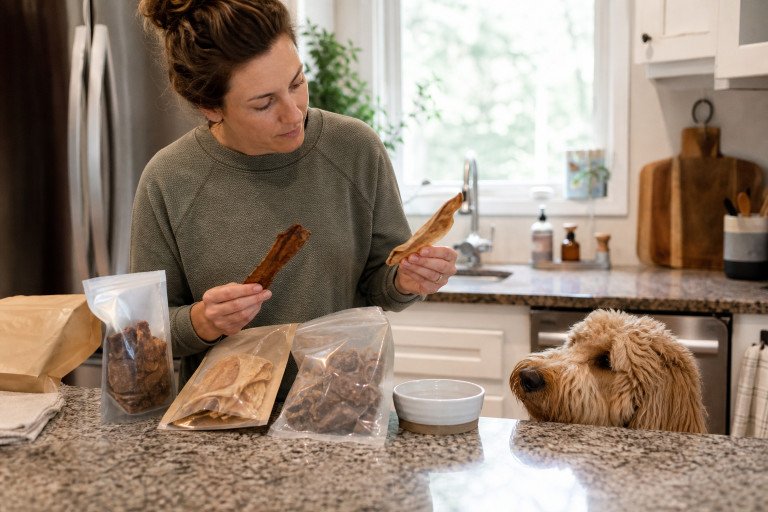
The collection gives owners several ways to compare proteins and textures without relying on vague flavor names. Freeze-dried options include chicken, pork, and turkey hearts. Dehydrated options include beef gullet, beef trachea, jumbo beef bully sticks, chicken feet, duck feet, duck necks, pork pizzle sticks, and half pig ears.
Protein Variety Supports More Deliberate Choices
Familiar proteins, including beef and chicken, may be convenient choices for dogs that already eat them without issue. Options such as duck, bison, lamb, and turkey can provide owners with additional protein options to consider. However, a less common protein is not automatically hypoallergenic. Dogs with suspected food allergies or recurring digestive concerns should be evaluated by a veterinarian, who may recommend a structured elimination diet rather than a casual series of food changes.
How Can Owners Compare Treat Ingredients?
Instead of choosing solely by package claims, use a repeatable checklist before introducing a new Joyride’s Kitchen treat:
- Read the full ingredient statement and identify the named animal protein.
- Confirm whether the item is a small reward, a chew, a topper, or a complete food.
- Review calorie information and feeding directions when they are provided.
- Match the texture and size to the dog’s age, mouth size, and chewing habits.
- Consider previous reactions to that protein or treatment format.
- Follow the package storage instructions after opening.
- Consult a veterinarian before changing a prescribed or therapeutic diet.
Are Freeze-Dried and Dehydrated Treats the Same?
No. Dehydration removes moisture through controlled drying, while freeze-drying removes moisture from a frozen product. Both processes can create shelf-stable treats, but they produce different textures and should be evaluated according to each product’s description and handling directions.
Joyride’s Kitchen includes dehydrated chews as well as freeze-dried raw treats. Owners should wash their hands after handling pet food or treats, store products as directed, and clean food-contact surfaces as needed.
How Many Treats Should a Dog Receive?
Treats should stay a small share of the day. Our pet calorie calculator shows your dog’s daily calorie target, so you can see what that share looks like.
Even a single-ingredient reward contributes to the dog’s overall calorie intake. A practical guideline is to keep treats and other extras at no more than about 10 percent of daily calories, with the remaining calories coming from a nutritionally complete diet. The 10 percent treat guideline is especially helpful for owners who use rewards frequently during training.
For example, a dog eating 400 calories per day would have an approximate 40-calorie allowance for treats and other extras. A dog eating 700 calories per day would have an approximate 70-calorie allowance. These are planning examples, not universal feeding instructions. The appropriate amount depends on the calorie density of the specific product, the dog’s body condition, activity level, and veterinary recommendations.
Can Joyride’s Kitchen Treats Work for Training?
They can, provided the format fits the task. Small pieces of freeze-dried heart treats may work well for repeated rewards because they can be portioned into smaller bites. Larger dehydrated items, such as trachea, gullet, or bully sticks, are generally better reserved for supervised chewing and quiet enrichment rather than rapid-fire reward sessions.
- Break larger pieces into appropriately sized training rewards when the product allows.
- Use a higher-value treat for challenging skills, such as recall or distraction training.
- Give larger chews only when the dog can be supervised.
- Include every reward in the day’s calorie budget.
- Keep fresh water available during and after treat time.
What Makes Joyride’s Kitchen Different From a Generic Treat Label?
Joyride’s Kitchen product descriptions identify the animal protein and distinguish between freeze-dried raw treats, dehydrated chews, and freeze-dried dog food. The collection also describes its products as sourced and made in the United States, with products identified by proteins including beef, chicken, duck, pork, bison, turkey, and lamb. That visibility can help owners compare options before purchasing.
What Are the Limits of Single-Ingredient Treats?
Simplicity is helpful, but it is not a guarantee of nutritional superiority or universal suitability. Organ-based treats can be rich, firm chews may not suit every dog, and any new treat can cause digestive upset in some animals. Start with a small serving, observe the dog, and discontinue use if an unusual reaction occurs. Dogs with pancreatitis, kidney disease, food sensitivities, dental concerns, or other diagnosed conditions need individualized veterinary guidance.
How Should Owners Use Joyride’s Kitchen Treats in a Daily Routine?
- Choose a protein that fits the dog’s established diet and known tolerances.
- Introduce the treat in a small amount.
- Use smaller pieces for training and save larger chews for supervised enrichment.
- Count all treats as part of the daily calorie plan.
- Store the product according to its label and maintain good hand hygiene.
- Ask a veterinarian for advice when dietary restrictions or health conditions are involved.
Conclusion
Joyride’s Kitchen offers a clear approach for owners seeking treats with named animal proteins and simple ingredient formats. The best choice still depends on the dog, the intended use, and the serving amount. By reviewing the ingredients, format, texture, calories, handling instructions, and health needs, owners can use these treats as thoughtful rewards rather than routine extras.